

Back in May 2022 we announced the start of a research project to explore current practices and issues in England affecting Black and Minority Community Led Housing and asked for our member co-operatives to get involved.
Opportunities and challenges for black and minority ethnic community-led housing is the final report from the research and finds that community-led housing has the potential to tackle racial inequalities within the housing system, but there are barriers to achieving this which need to be addressed.
The rese arch highlights significant opportunities to diversify leadership and participation of community-led housing initiatives and makes recommendations to enhance the inclusion and contribution of black and minority ethnic communities to the community-led housing sector. In enabling greater engagement and opportunity for black and minority ethnic communities in the creation of community-led homes, there are a range of positive social, economic and political outcomes to be realised for communities, public authorities, and funders.
The research reports that:
- The majority of participants said that the housing needs of black and minority ethnic communities are unmet, ignored and under-prioritised in government housing policy and planning practice.
- Community-led housing empowers people to create their own housing solutions. As such, it provides an opportunity to overcome the housing disadvantages faced by black and minority ethnic communities.
- While community-led housing leaders have displayed a commitment to enhancing equality, diversity and inclusion in the sector, awareness of community-led housing remains low among black and minority ethnic communities and more extensive engagement is needed with these communities by the community-led housing sector.
- While participants highlighted the importance of representation, many felt that black and minority ethnic communities are under-represented in key roles in the sector and highlighted experience of exclusion from community-led housing opportunities and decision-making. Some community-led housing models have been perceived as ‘white spaces’, implicitly excluding black and minority ethnic members.
- The success of black and minority ethnic community-led projects is threatened by inconsistent funding frameworks and policy processes. Access to funding was a key barrier for projects, and there is a perception that black and minority ethnic communities have been marginalised from allocations made, for example through funding allocations made from public and private sector sources.
The research calls on funders to record data on how black and minority ethnic communities are represented in community housing fund financing. It also calls for local and combined authorities to actively promote opportunities for black and minority ethnic community-led projects to acquire land and develop inclusive planning and engagement processes.
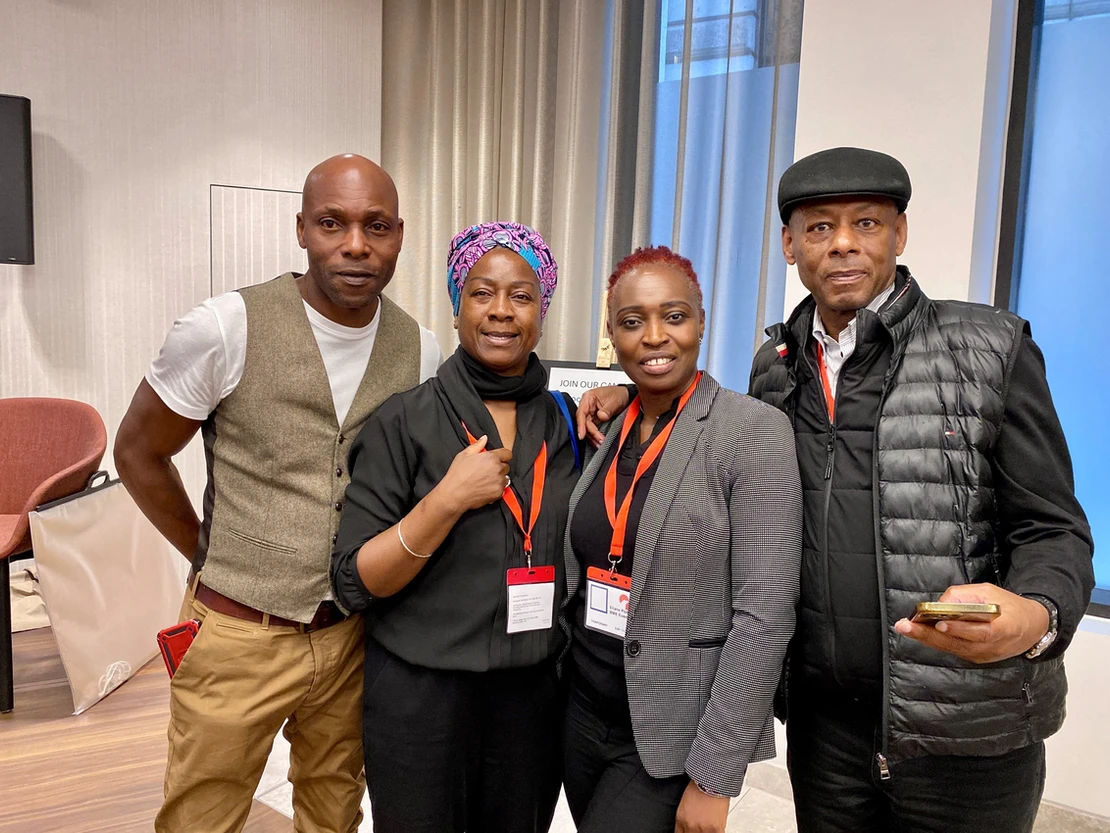 Co-ordinated by Leeds Community Homes in partnership with CCH Associate – Claude Hendrickson MBE, Henri Baptiste (Pathway Housing Solutions), Yael Arbell (Sheffield Hallam University) and Tom Moore (University of Liverpool), it was a collaborative project between community-led housing practitioners and academics with research experience in this area.
The research was funded by Nationwide Foundation, Tudor Trust, Power to Change, East Midlands Community Housing, Ubele, Communities CAN, Community Land Trust Network, Community First Oxfordshire, Durham Community Action, Kent Community Housing Hub, and Cheshire Community Council, and was supported by the Confederation of Co-operative Housing.
Claude Hendrickson MBE, Community-led Housing Advisor from Leeds Community Homes, said:
“It’s been 30 years of missed opportunities, but this research highlights many barriers to black and minority ethnic communities within the community-led housing and Community Land Trust sector. It lays the foundation to change the barriers into opportunities in the future and help erode some of the disparities that BME communities are still facing. The community-led housing sector must have black and minority ethnic input at all levels to be truly inclusive.”
Gary Hartin, Programme Manager for Backing Community-Led Housing, Nationwide Foundation said
“We are grateful to the individuals whose voices have fed into this work, which will make a significant contribution to the community-led housing sector. As a funder, we will be looking at how our work can drive more inclusive practice in the community-led housing space, as well as our practices. This is vital for empowering black and minority ethnic groups to tackle housing disadvantage, and indeed for increasing the number of decent affordable homes available, which we know community-led housing plays an important role in.”
Blase Lambert CEO of Confederation of Co-operative Housing said:
“CCH welcomes this publication into diversity and leadership in the community led housing sector. It highlights what is great about the sector while challenging where the sector needs to do more. CCH would like to thank our member co-operatives who had an input into the research project and publication.”